More Than A Numbers Game
9 Jul 2026
Sir Keir Starmer’s government aimed to build one and half million new homes in five years over the lifetime of the current parliament and his housing minister further pledged in January this year to build 300,000 ‘social and affordable’ homes over a 10-year period. To what extent these pledges overlap is not entirely clear but now, irrespective of this, Andy Burnham, the putative replacement PM, has promised to deliver the biggest council house building programme since the post WW2 era. Allied to this he wants to see the regeneration of ‘all the postcodes’, over the next decade.
By way of reference, some 1.4 million council homes were built by local authorities between 1946 and 1955, and Shelter estimates that 4.4 million social homes were built in the 35 years following the end of WW2. This represented an average of 126,000 homes being built per year, ‘a truly unbelievable rate of house building by today’s standards’. (Shelter, The story of social housing, 2026). Indeed, the Local Government Association has calculated that over the past 10 years councils have averaged building only around 1,400 homes a year. (LGA, The future of council housing, 2026)
Labour’s targets are all admirable aims, but progress toward the wider one and half million homes of all sorts has been painfully slow over the last two years with the private sector concerned over increased regulation, building costs and market demand. So, it is easy to be cynical with so many pledges hanging in the air, and we await the precise details on how the new ambitions for council housing articulated by Andy Burnham will be realised. However, from the little said, the soon to be prime minister clearly sees a turbo charged, newly empowered local government sector leading the way. Working in collaboration with the private sector and with more devolved resources local agencies will be responsible for delivering all the housing, place-based regeneration and high street revitalisation that is envisioned.
In advancing this approach the incoming prime minister has rightly recognised that over the last 25 years, much against the odds and with dwindling resources, it is local government that has worked hard and proven itself capable of delivering regeneration and new homes, even if nowhere near the scale required. This has often been achieved through innovative joint ventures with developers, using council assets as collateral and with the local authority leveraging advantageous borrowing rates. The government might extend such an approach by establishing a public state-owned development company that could build houses directly itself, taking advantage of the public sector’s access to low interest rates through mechanisms such as the Public Works Loan Board.
It will be interesting to see precisely what delivery vehicles Burnham most strongly supports going forward, particularly since the current Labour party is probably no longer disposed to favouring the old-style New Labour Private Finance Initiative type of service contracts of the Blair/Brown variety. In any scenario envisaged it is local authorities that will need increased powers and funding to make any real difference. They will be the key local agencies for delivery, and many have seen their development capacity seriously eroded or outsourced over the last few decades.
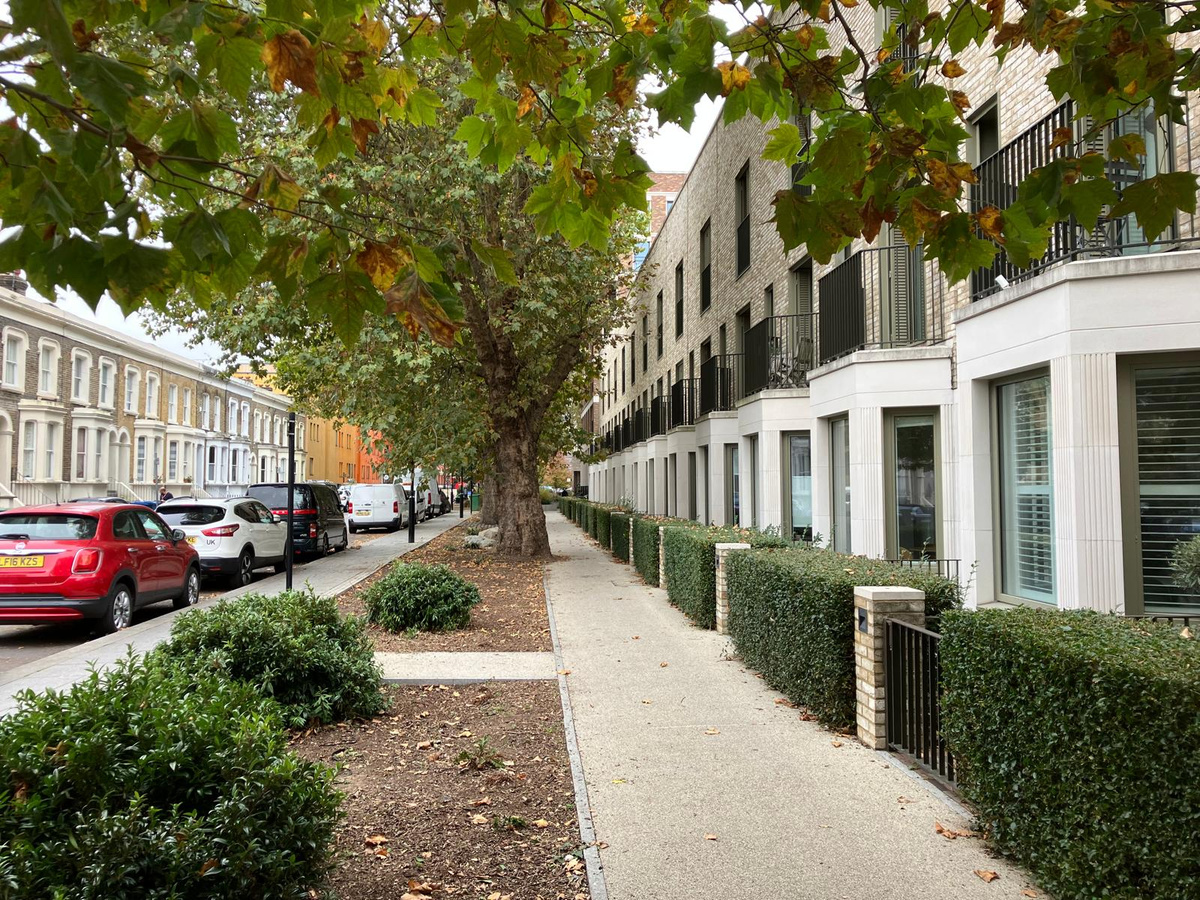
But perhaps an equally, if not more, important question than how can this be delivered? is the question what should be delivered? It is certainly the question that needs addressing first. For what we don’t need is the rapid construction of vast, shoddy, ugly, mono-tenure estates that quickly become the stigmatised slums of the future. What we do need is an acute appreciation of what makes a good neighbourhood. Indeed, we need a better appreciation of what makes a successful town or city full stop.
To help us avoid the mistakes of the past and create vibrant places a new book, Better Neighbourhoods For All – Jane Jacobs Today, is a welcome and timely guide to the essence of good urban planning. Taking the key messages from Jacobs’ groundbreaking work The Death and Life of Great American Cities the author vividly shows why quantity must never be allowed to trump quality – and how to marry the two successfully. The watchwords will be mixed use, short blocks of low/medium rise, the retention of old buildings and density.
Comments
Leave a comment